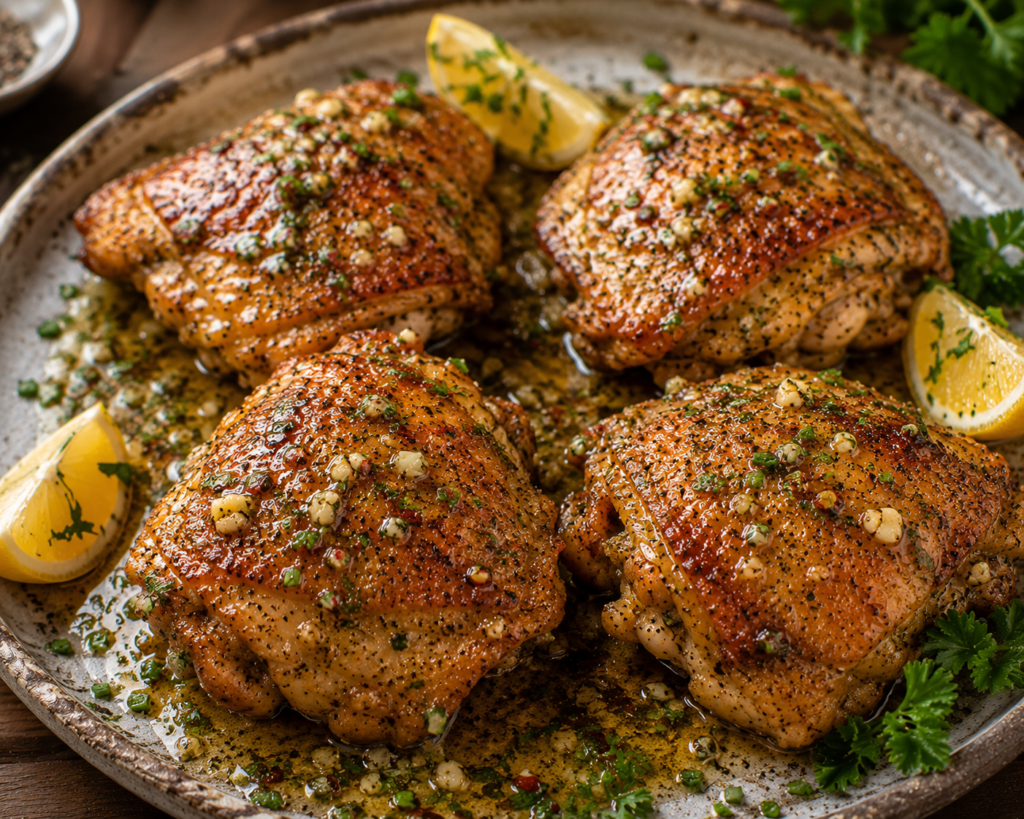


There’s a lot going on in these cowboy butter chicken thighs, but none of it feels complicated. The chicken gets a proper sear first, so the skin turns deeply golden while the meat stays juicy underneath. Then, once the hard work is done, the hot thighs are finished with a buttery mix of garlic, lemon, Dijon, fresh herbs, and just enough heat to keep every bite interesting.
The timing matters here. Adding the cowboy butter at the end means the garlic stays fragrant, the herbs still taste fresh, and the lemon doesn’t disappear into the background. Instead of tasting like chicken cooked in plain melted butter, you get a glossy, savory sauce that actually tastes bright and balanced.
It’s the kind of dinner that feels a little more special than everyday chicken thighs, while still being straightforward enough for a weeknight.
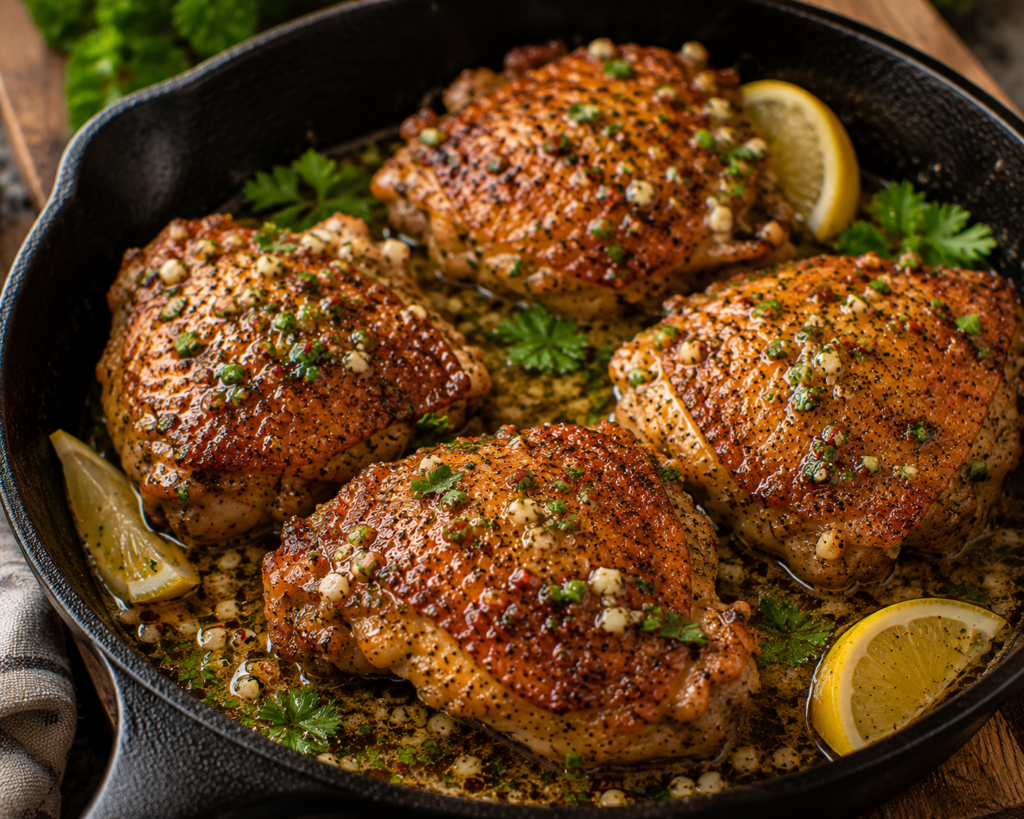
Table of Contents
Quick Recipe Highlights
If you want the short version before getting into the details, here’s what makes these chicken thighs work:
- Ready in about 45 minutes: Most of the cooking is hands-off once the skillet goes into the oven.
- Crispy outside, juicy inside: Starting the thighs skin-side down gives them time to develop that golden, savory crust.
- Cowboy butter goes on last: The residual heat melts it over the chicken without scorching the fresh garlic and herbs.
- Easy to adjust: Dial the cayenne up or down depending on how much heat you like.
- One skillet: Searing and oven-finishing happen in the same pan, which also keeps all those flavorful chicken juices around for the butter.
- Built for serving with simple sides: Potatoes, rice, vegetables, or eventually our planned pearl couscous recipe can soak up the extra cowboy butter left in the pan.
Why You’ll Love This Recipe
The best part about these cowboy butter chicken thighs is that you get plenty of flavor without turning dinner into a complicated project. The chicken only needs a simple seasoning before it hits the skillet; most of the personality comes from what happens at the end.
Searing the thighs first gives the skin a proper chance to brown instead of becoming soft under a layer of butter. Once the chicken is cooked, the cowboy butter melts into the warm pan juices, carrying the garlic, herbs, lemon, and spices over every piece.
If you already have a batch of our Cowboy Butter Recipe on hand, this is also an easy way to turn it into dinner rather than serving it only as a dipping sauce. That connection is exactly what makes this recipe useful: one versatile butter can move from steak and bread to a full chicken meal without much extra work.
And although the finished skillet looks impressive enough to serve to guests, the method is still approachable for a regular weeknight, one pan, familiar ingredients, and no complicated sauce technique.
Ingredient Overview
The ingredient list may look bold at first glance, but most of the flavor comes from pantry staples, fresh herbs, and a few ingredients that work together to balance the richness of the chicken.
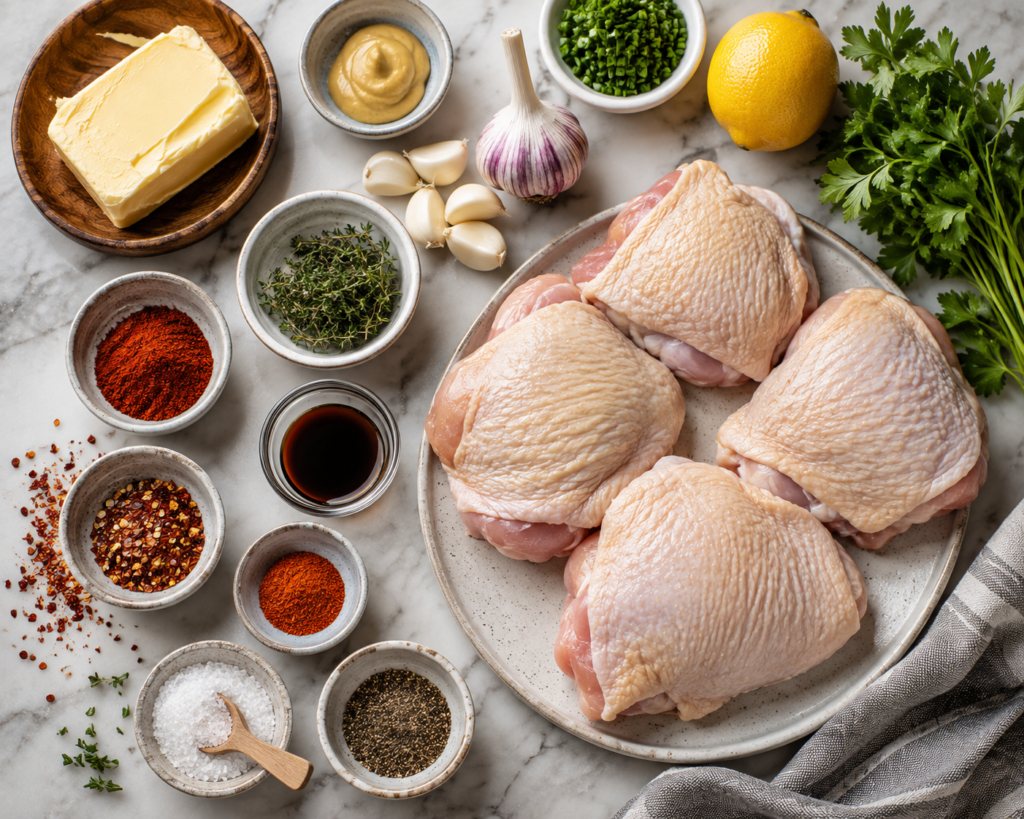
Bone in, skin on chicken thighs are the foundation. They give us juicy meat and, just as importantly, a layer of skin that can turn beautifully golden in the skillet. A simple mix of smoked paprika, garlic powder, salt, and black pepper seasons the chicken without competing with the cowboy butter.
The butter is where the recipe really comes alive. Fresh garlic gives it its savory bite, while parsley and chives add freshness. Dijon mustard brings a subtle tang, and lemon juice and zest brighten everything up so the sauce never feels too heavy. Smoked paprika, red pepper flakes, and cayenne add warmth and a little complexity rather than overwhelming heat.
If you make our Cowboy Butter Recipe separately, you will recognize the same balance of buttery richness, garlic, herbs, citrus, and spice. Here, those flavors are being used specifically to complement browned chicken thighs and the savory juices left behind in the skillet.
Ingredient Notes
A few ingredients do most of the heavy lifting here, and understanding their roles makes it much easier to adjust the recipe without throwing the flavors out of balance.
Chicken thighs: Bone in, skin on thighs are worth using when possible. The skin gives you a surface that can become deeply golden in the skillet, while the darker meat stays juicy as the chicken finishes in the oven. Choosing thighs of similar size also helps them cook at roughly the same rate.
Unsalted butter: Starting with unsalted butter gives you more control over the final seasoning. That matters because Dijon mustard, Worcestershire sauce, and the seasoned chicken already bring savory flavor to the skillet.
Fresh garlic: This is one ingredient I would not replace with garlic powder in the cowboy butter itself. Fresh garlic gives the melted butter its sharper aroma and works especially well when it is added toward the end rather than exposed to intense heat for the entire cooking process.
Lemon: Using both the zest and juice gives you two different things. The zest adds a fragrant citrus note, while the juice provides the acidity needed to cut through the richness of the butter and chicken.
Fresh herbs: Parsley and chives keep the cowboy butter tasting fresh. Add them to the butter rather than cooking them aggressively so their flavor and color are not lost.
Best Ingredients to Use
You do not need expensive ingredients for this recipe, but a few small choices can noticeably improve the finished chicken.
Choose chicken thighs that are similar in size with the skin still intact. Evenly sized pieces are easier to cook together, while unbroken skin gives you a better surface for browning.
For the cowboy butter, use real unsalted butter, fresh garlic, and a fresh lemon. Bottled lemon juice provides acidity, but it cannot replace the fragrant zest we use here. Fresh parsley and chives are also worth buying because they give the finished butter a cleaner, brighter flavor.
For Dijon mustard, a smooth classic Dijon is all you need. There is no reason to use an especially strong or flavored variety because it should support the garlic, lemon, and herbs rather than dominate them.
Ingredient Substitutions
This recipe is flexible, but some substitutions change the way the chicken cooks, not just the flavor.
Boneless chicken thighs work well when you want a quicker dinner, but they will generally cook faster. Skinless thighs are another option, although you will lose the crisp skin that makes the original version especially good.
If you prefer less heat, simply reduce or leave out the cayenne. You can also adjust the red pepper flakes without changing the rest of the cowboy butter.
For the herbs, fresh parsley is worth keeping, while chives can be replaced with finely sliced green onion in a pinch. If you are missing Dijon mustard, another smooth mustard can work, but expect the flavor to shift slightly.
Whatever chicken cut you use, rely on internal temperature rather than trying to match the original cooking time exactly.
Expert Tips
A few small details make a noticeable difference with this recipe.
Give the skin time to brown. Once the thighs hit the skillet, resist moving them around. Consistent contact with the hot pan is what develops that golden surface.
Watch the heat, not just the clock. If the skin is darkening too quickly, lower the heat slightly rather than rushing the sear.
Save the cowboy butter for the finish. Adding it after the chicken has cooked keeps the garlic, lemon, and fresh herbs much brighter.
Taste before adding more salt. The seasoned chicken, Dijon, and Worcestershire already bring plenty of savory flavor.
Recipe Variations
Once you understand the basic method, the flavor is easy to adjust.
For milder cowboy butter chicken, omit the cayenne and reduce the red pepper flakes. For something brighter, finish the skillet with extra fresh lemon zest rather than adding much more juice, which could overpower the butter.
Boneless thighs also work when you want a quicker version, although they cook faster and will not give you quite the same crispy skin.
This recipe also opens the door to the rest of our planned cowboy butter collection. The same garlic, herb, and lemon profile will eventually connect naturally with Cowboy Butter Steak, Garlic Butter Shrimp, and Garlic Butter Salmon.
Serving Suggestions
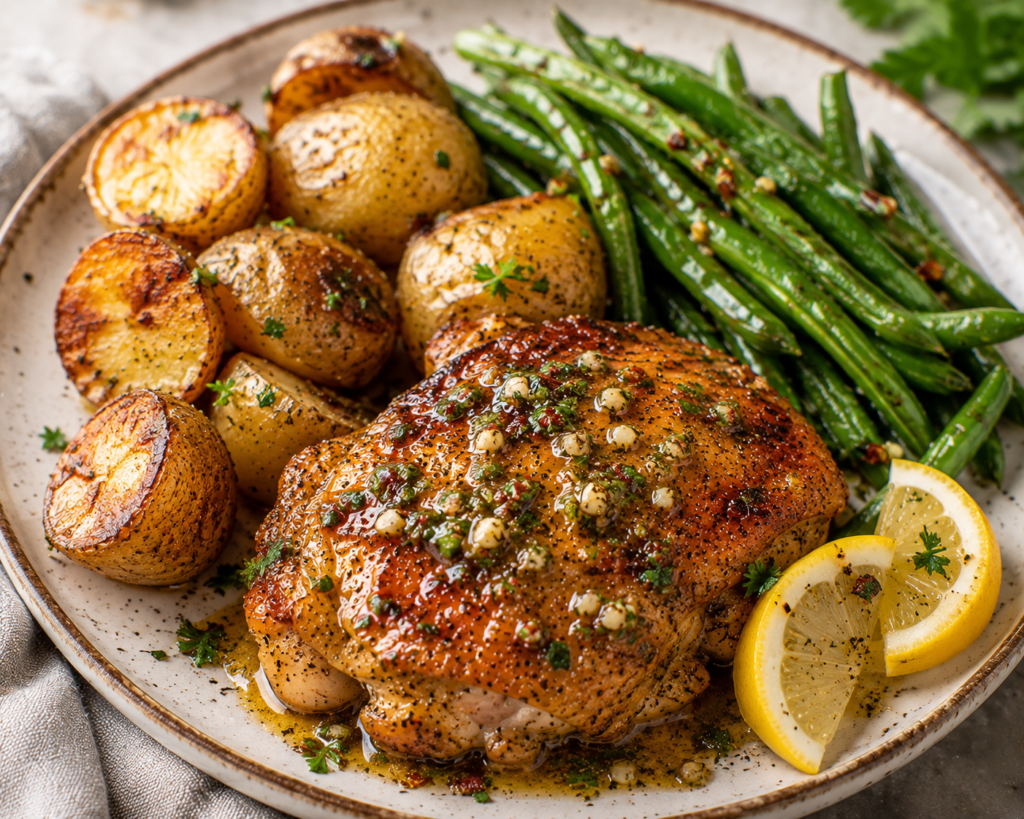
Cowboy butter chicken is rich and savory, so I like pairing it with sides that either soak up the buttery pan juices or bring something fresh to the plate.
Roasted potatoes, rice, green beans, asparagus, or a simple green salad all work without competing with the chicken. Pearl couscous would be especially good because its small pasta like pearls can catch some of the garlic and herb butter left on the plate.
Storage
Let leftovers cool, then transfer the chicken and some of the buttery pan juices to an airtight container and refrigerate promptly. The USDA recommends using refrigerated cooked chicken within three to four days.
Keeping a little cowboy butter with the thighs is useful because those juices can be spooned back over the chicken when you reheat it.
Freezing
You can freeze leftover cowboy butter chicken, but expect the skin to lose some of its crispness once it has been frozen and thawed.
Let the chicken cool before placing it in a freezer safe container. Keeping a little of the cowboy butter with each portion helps protect the meat and gives you something flavorful to spoon over it later.
For the best texture, thaw the chicken overnight in the refrigerator before reheating rather than reheating it directly from frozen.
Reheating
Reheat the chicken gently so you warm the meat without cooking it much further. An oven or air fryer is particularly useful when you want to bring some texture back to the skin.
Save any cowboy butter or pan juices from storage and spoon them over the chicken as it warms. Once hot, a small squeeze of fresh lemon can also bring back some of the brightness that naturally fades during refrigeration.
Avoid repeatedly reheating the same leftovers. Portioning the chicken before storage makes it easier to warm only what you plan to eat.
More Recipes You’ll Love
If you enjoyed these cowboy butter chicken thighs, try the original Cowboy Butter Recipe next. It is an easy way to bring the same garlicky, lemony flavor to steak, vegetables, seafood, and more.
As our savory collection grows, Garlic Butter Shrimp, Cowboy Butter Steak, and Pearl Couscous will be natural recipes to explore alongside this one.
Conclusion
These cowboy butter chicken thighs bring together golden chicken, fresh garlic, herbs, lemon, and rich cowboy butter without making dinner complicated. Browning the thighs first and adding the butter toward the end gives you the best of both: flavorful chicken and a bright, buttery finish.
Serve them straight from the skillet with your favorite simple side and plenty of those garlicky pan juices spooned over the top.
Cowboy Butter Chicken Thighs
Description
These Cowboy Butter Chicken Thighs are seared until golden and crisp, then finished with a bright garlic-herb cowboy butter made with lemon, Dijon mustard, fresh herbs, and a touch of heat. It's an easy skillet dinner with bold flavor and juicy chicken in every bite.
Ingredients
Instructions
-
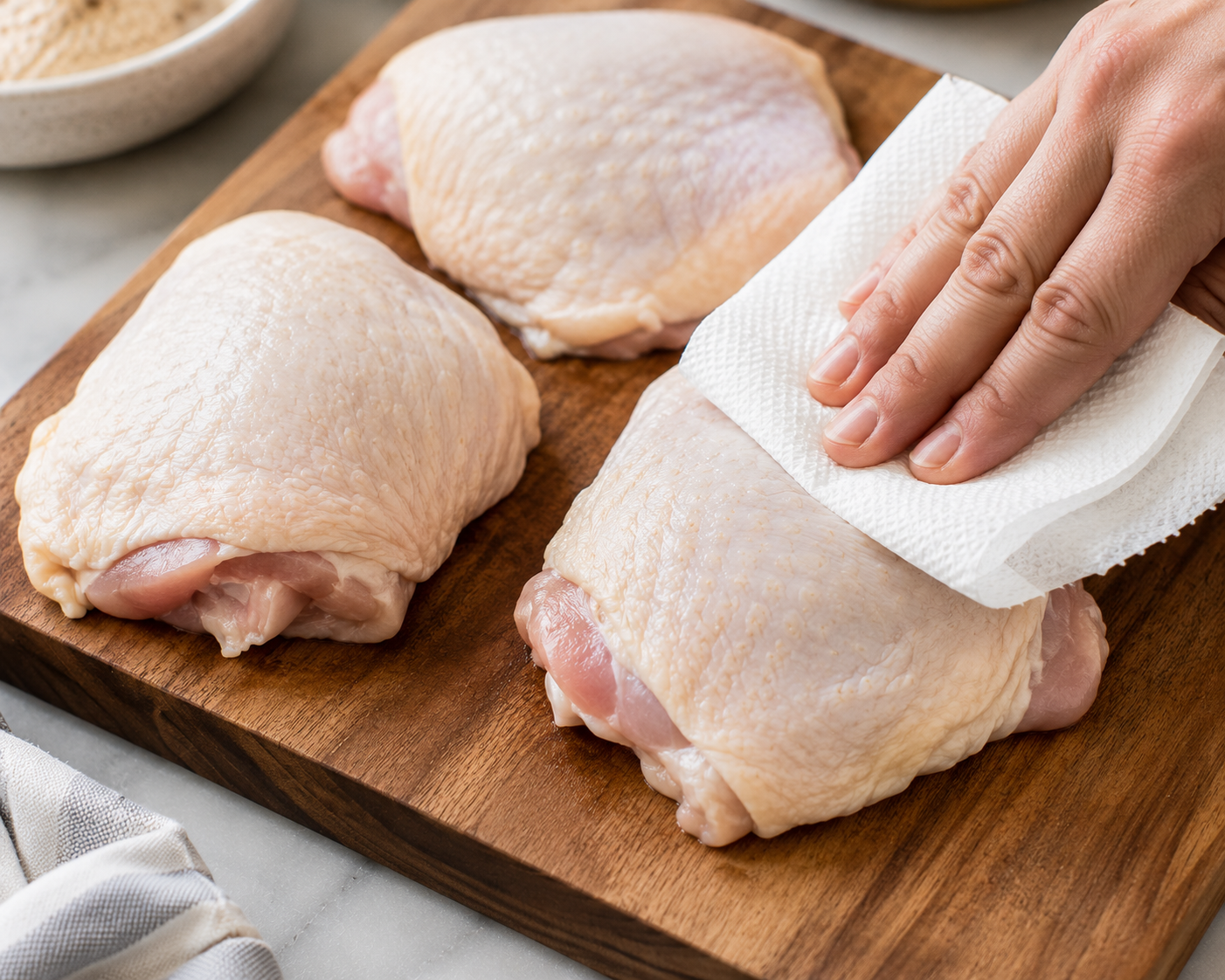
Pat the Chicken Dry
Pat the chicken thighs thoroughly dry with paper towels, paying particular attention to the skin. Drying the surface helps the chicken brown properly during the searing step.
-
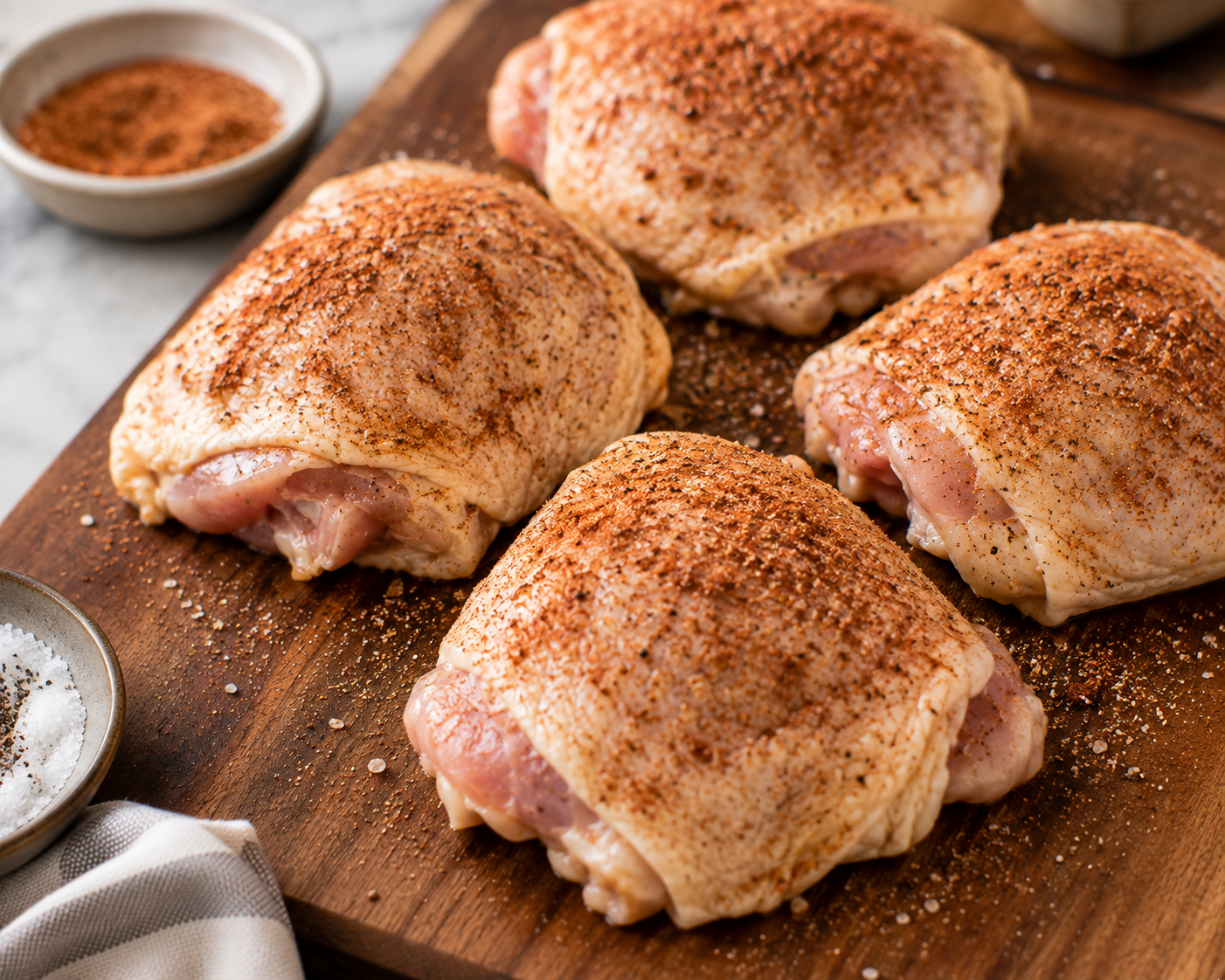
Season the Chicken
Combine the kosher salt, black pepper, smoked paprika, and garlic powder. Season the chicken evenly on all sides, making sure the skin is well covered.
-
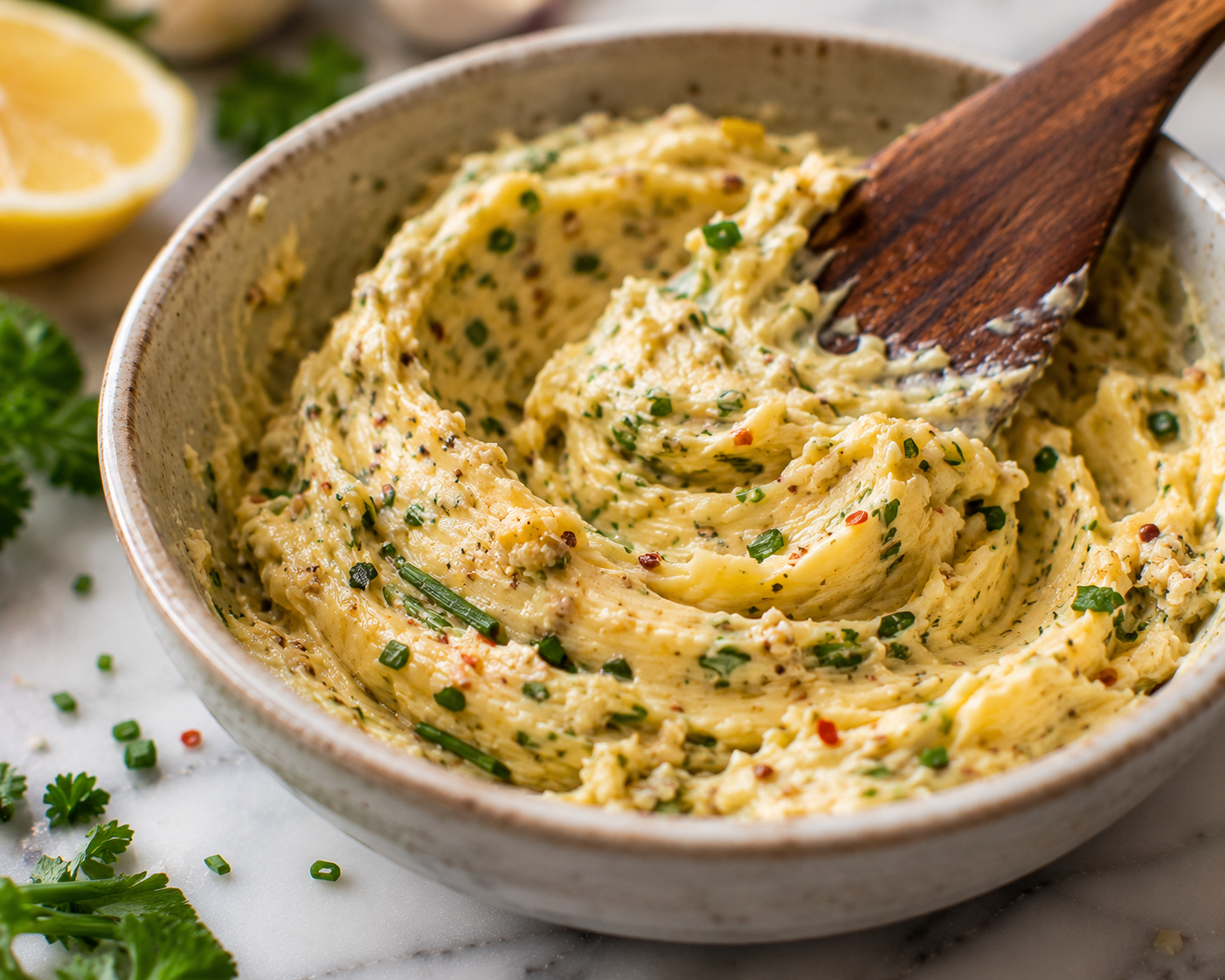
Prepare the Cowboy Butter
In a small bowl, combine the softened butter, minced garlic, lemon juice, lemon zest, Dijon mustard, parsley, chives, smoked paprika, red pepper flakes, cayenne, thyme, Worcestershire sauce, salt, and black pepper. Mix until evenly combined.
-
Heat the Skillet
Heat a large oven-safe skillet over medium heat. Add the neutral oil and allow it to heat before adding the chicken.
-
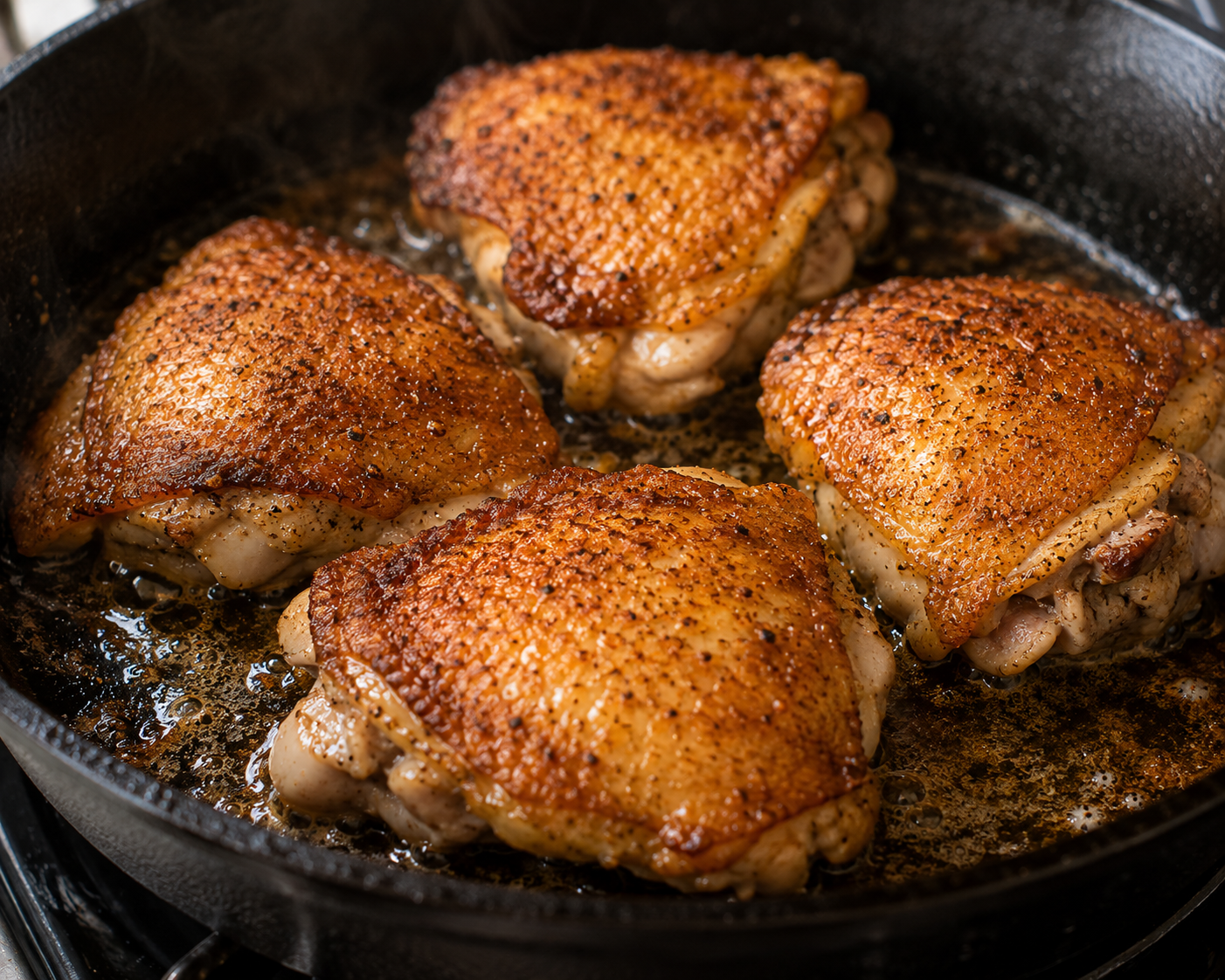
Sear the Chicken
Place the chicken thighs skin-side down in the hot skillet. Cook without moving them for about 6–8 minutes, or until the skin is deeply golden and releases relatively easily from the pan.
-
Brown the Second Side
Carefully turn the chicken thighs over and cook for about 2 minutes on the second side.
-
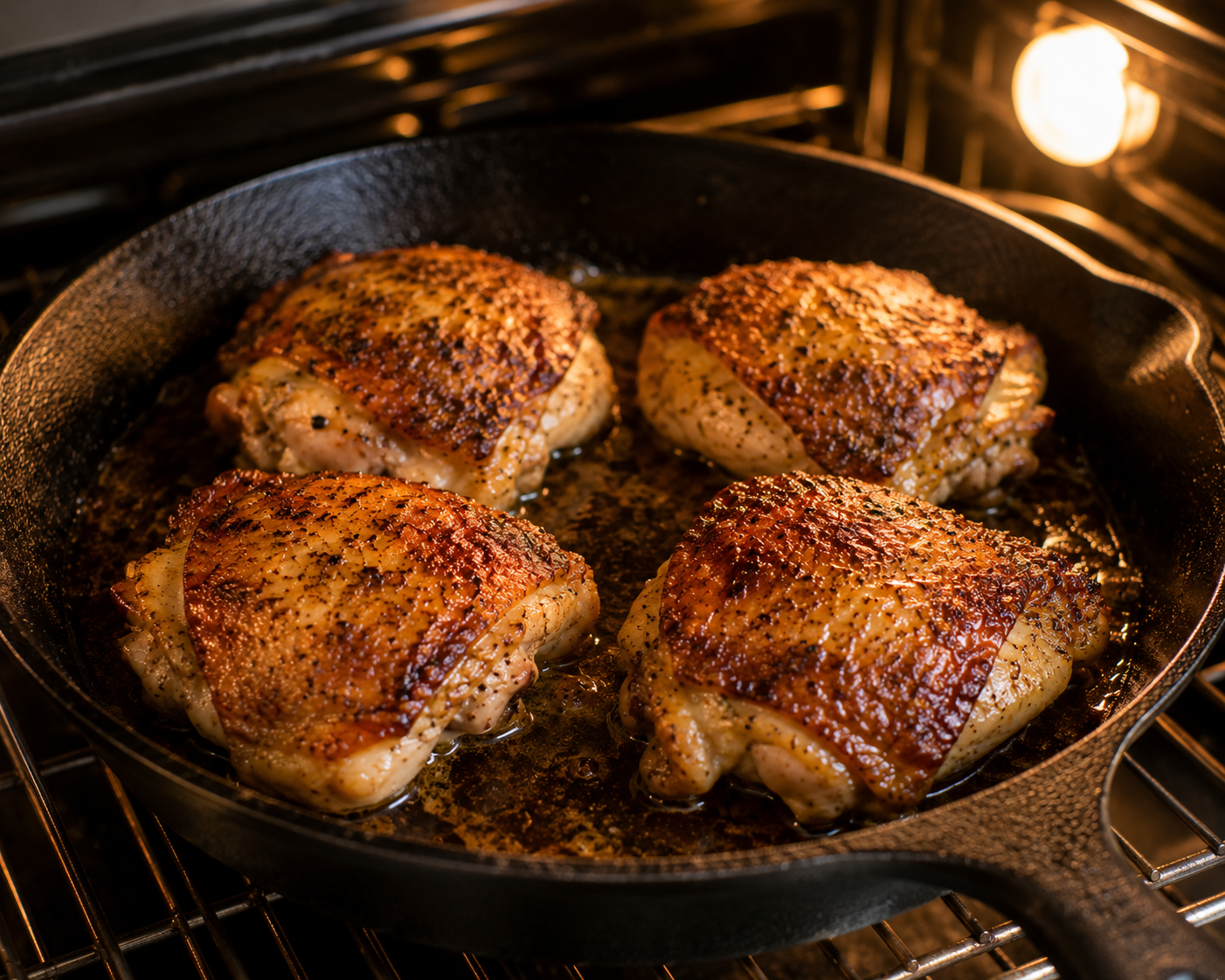
Finish the Chicken in the Oven
Transfer the skillet to a preheated 400°F (200°C) oven. Continue cooking until the thickest part of each chicken thigh reaches 165°F (74°C) when checked with an instant-read thermometer, avoiding the bone.
-
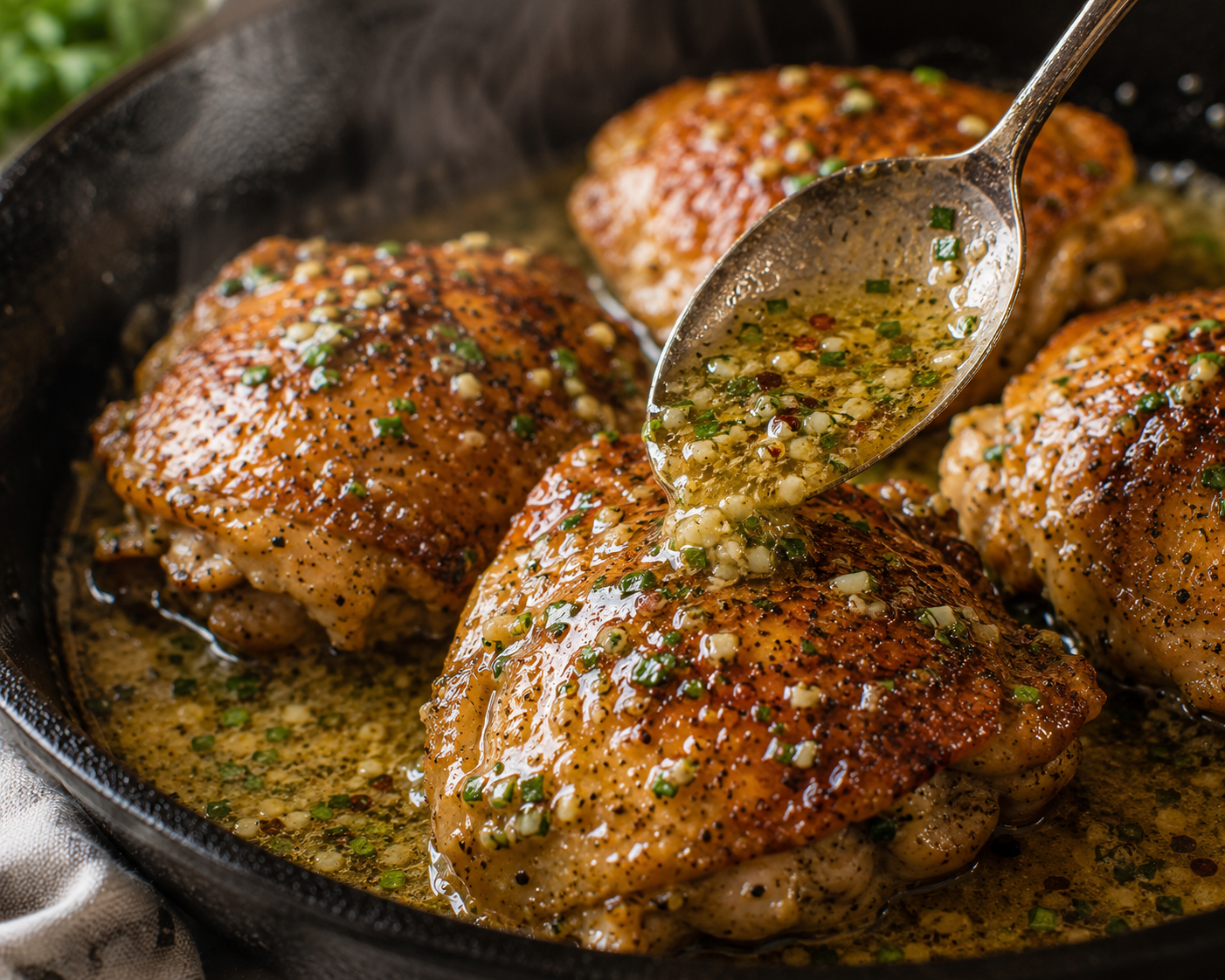
Add the Cowboy Butter
Remove the skillet from the oven. Spoon the prepared cowboy butter over and around the hot chicken thighs. Let the residual heat soften and melt the butter, then gently baste the chicken with the melted butter and pan juices.
-
Finish With Lemon and Herbs
Spoon the melted cowboy butter and pan juices over the chicken. Finish with the remaining fresh lemon juice and chopped parsley.
-
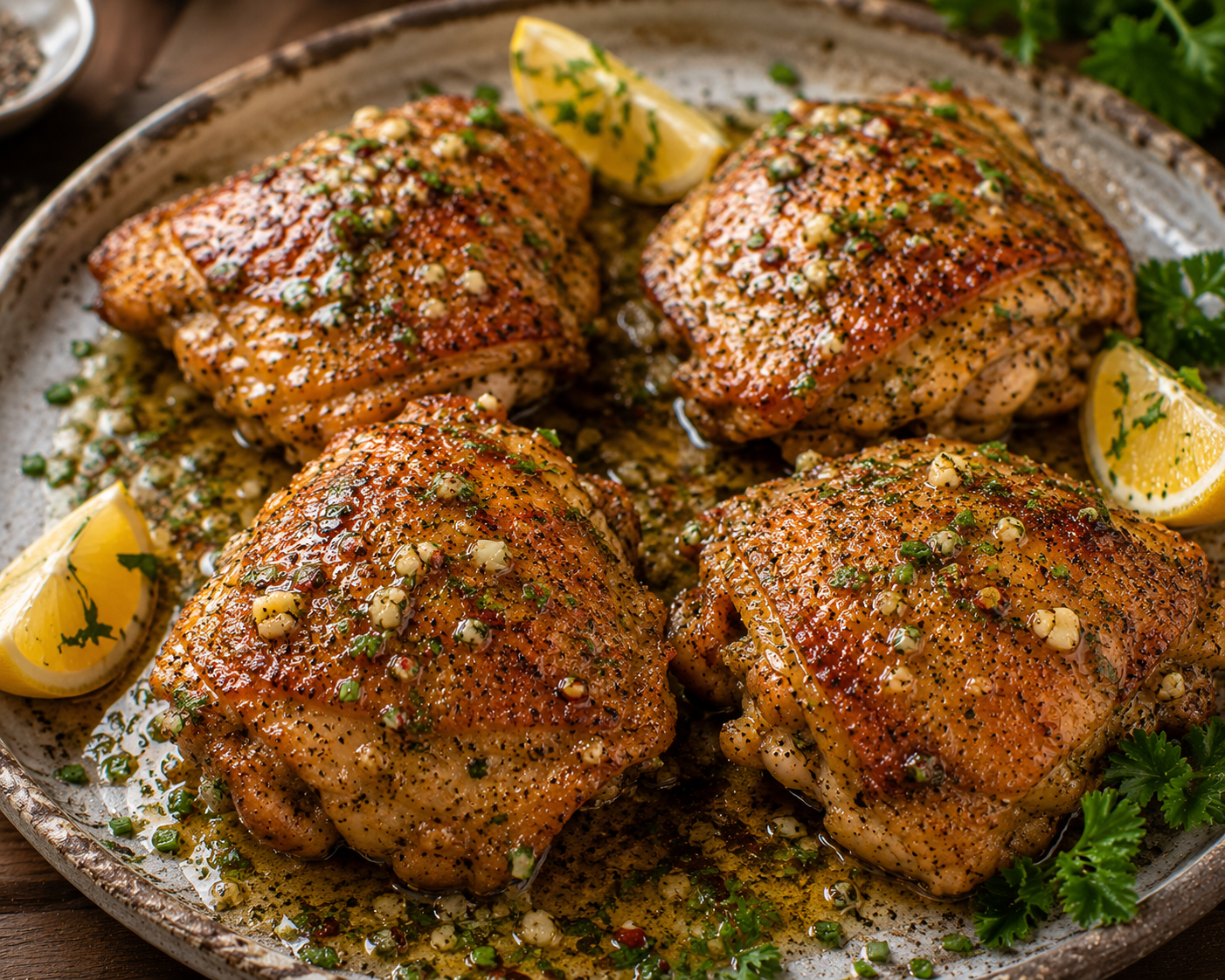
Rest and Serve
Let the chicken rest briefly, then serve with lemon wedges and additional cowboy butter from the skillet spooned over the top.
Nutrition Facts
Servings 4
- Amount Per Serving
- Calories 460kcal
- % Daily Value *
- Total Fat 41g64%
- Saturated Fat 13g65%
- Sodium 600mg25%
- Total Carbohydrate 3g1%
- Dietary Fiber 0.5g2%
- Sugars 1g
- Protein 20g40%
* Percent Daily Values are based on a 2,000 calorie diet. Your daily value may be higher or lower depending on your calorie needs.
Note
For the best results, pat the chicken thighs very dry before seasoning so the skin can brown properly. Sear the chicken skin-side down without moving it until deeply golden, then finish it in the oven until the thickest part reaches 165°F (74°C). Add the cowboy butter after cooking rather than during the initial sear so the fresh garlic and herbs stay flavorful instead of burning. Chicken thighs can vary in size, so use internal temperature rather than cooking time alone to determine doneness. For less heat, reduce or omit the cayenne pepper.