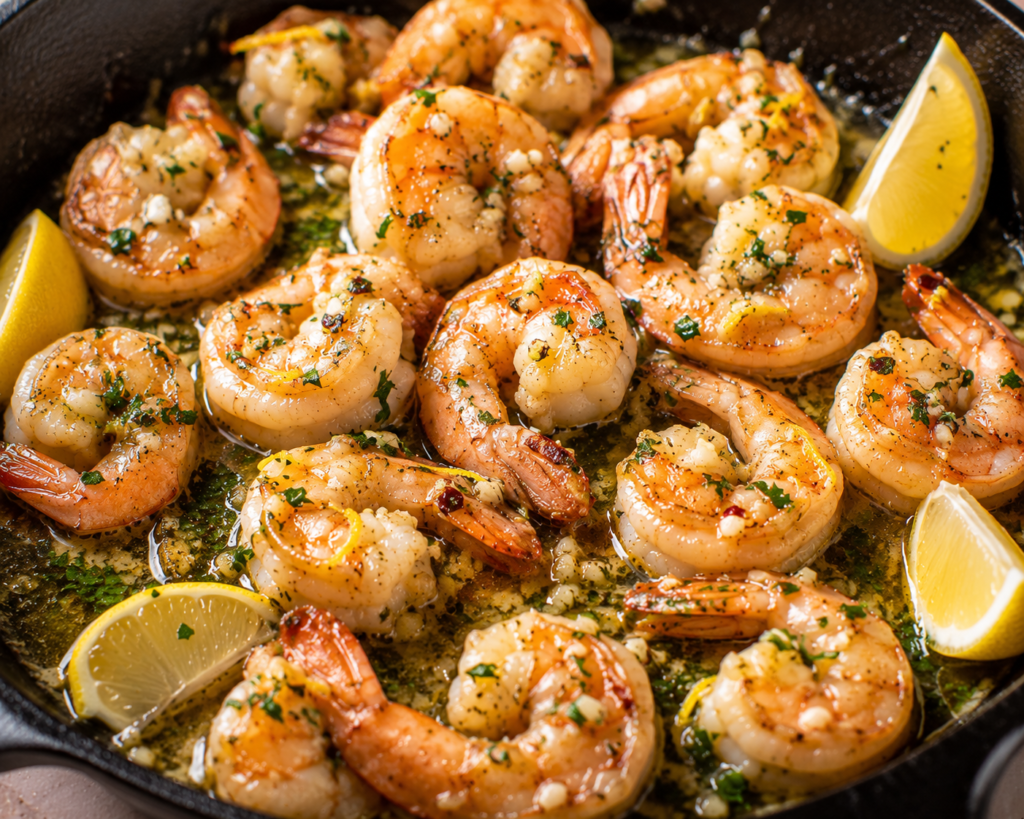


Garlic butter shrimp is one of those dinners that comes together quickly but still depends on a few small details. The shrimp need enough heat to cook fast without turning rubbery, while the garlic needs gentler heat so it stays fragrant instead of bitter. This version uses a simple skillet method with fresh garlic, butter, lemon, and parsley, giving you tender shrimp coated in a glossy sauce that works just as well over rice or couscous as it does with crusty bread on the side.
Table of Contents
Quick Recipe Highlights
This garlic butter shrimp is ready in about 15 minutes and uses one skillet from start to finish. Large shrimp cook quickly in olive oil before butter and garlic are added at gentler heat, which gives you better control over both the shrimp and the sauce. Lemon and parsley go in at the end so the final flavor stays fresh and balanced.
Why You’ll Love This Recipe
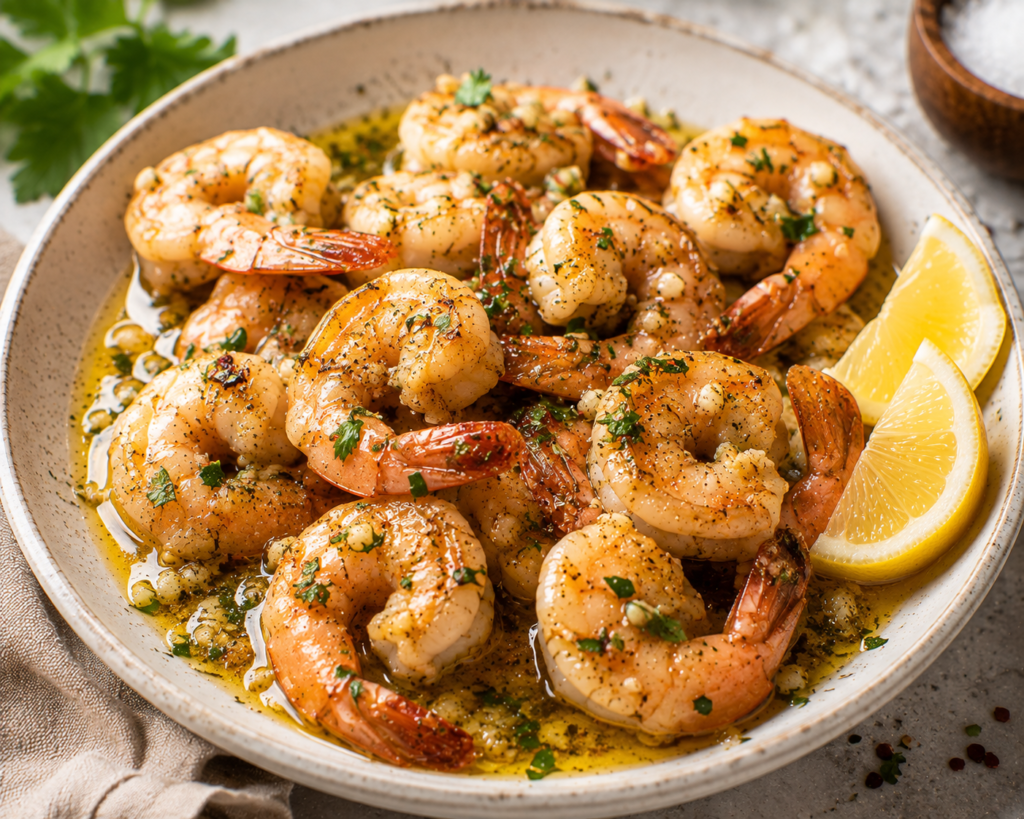
The recipe keeps the ingredient list short while still giving the shrimp plenty of flavor. Using oil for the initial sear and adding butter later helps prevent scorched butter and burnt garlic, two common problems with quick shrimp recipes. It is also easy to adapt at the table, since the finished shrimp can be served with rice, pasta, bread, vegetables, or couscous without changing the base recipe.
Ingredient Overview
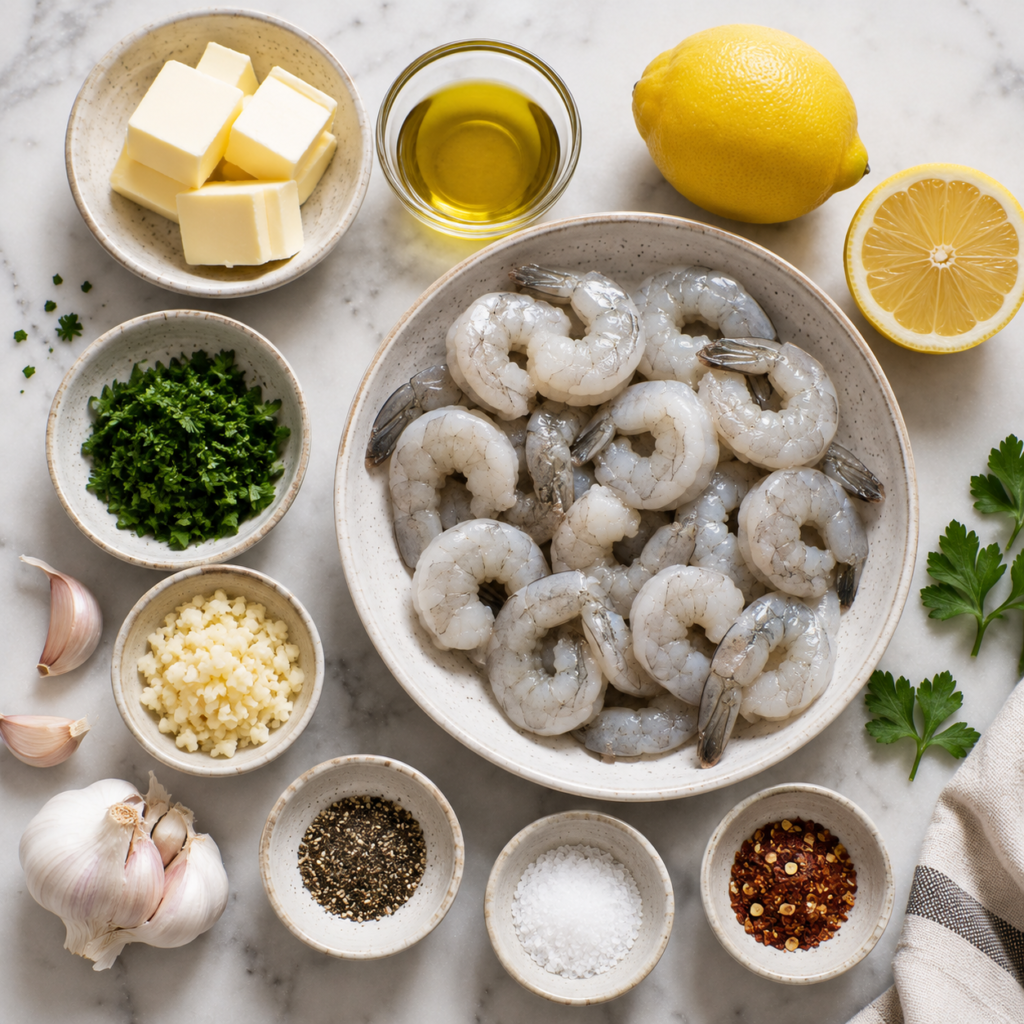
The ingredient list is intentionally simple. Large raw shrimp form the base, while olive oil handles the hotter part of cooking. Butter, fresh garlic, lemon, parsley, salt, and black pepper build the sauce. Optional red pepper flakes add a little warmth without changing the overall flavor of the dish.
Ingredient Notes
Use raw shrimp rather than precooked shrimp so you can control the texture from the start. Large shrimp around 21 to 25 count per pound are a good fit because they cook quickly without becoming difficult to manage in the skillet.
Unsalted butter gives you better control over seasoning, while the olive oil is there for heat management rather than flavor. Fresh garlic matters here because it perfumes the butter in a way dried garlic cannot fully replace. Lemon zest brings aroma without adding extra liquid, and the juice added at the end keeps the sauce bright. Flat leaf parsley finishes the dish with freshness without competing with the garlic and butter.
Best Ingredients to Use
For the best texture, choose raw shrimp that are peeled and deveined, whether fresh or frozen. Frozen shrimp work well as long as they are fully thawed and dried before cooking. Look for shrimp labeled around 21 to 25 count per pound rather than relying only on words such as “large” or “jumbo,” since those labels can vary between brands.
Use fresh garlic instead of jarred minced garlic if possible. Fresh lemon is also worth using here because both the zest and juice contribute to the finished sauce. For the butter, unsalted is the easiest choice because it leaves room to adjust seasoning at the end.
Ingredient Substitutions
You can use tail on or tail off shrimp depending on how you plan to serve them. Tail off is more convenient over rice, pasta, or couscous.
If you only have salted butter, use it and reduce the added salt at first. Chopped chives can replace parsley for a slightly milder herbal finish. If you prefer more heat, increase the red pepper flakes gradually.
Garlic powder can work in a pinch, but the flavor will be less fresh and the sauce will lose some of the texture from the minced garlic. Lime can replace lemon, although it will shift the flavor away from the classic garlic butter profile.
Equipment
A wide 12 inch skillet is ideal because the shrimp need enough room to cook in a single layer. Stainless steel or well seasoned cast iron works especially well for quick searing, though a nonstick skillet is fine if that is what you use most comfortably. You will also need tongs or a thin spatula, a sharp knife, a cutting board, measuring spoons, and a fine grater for the lemon zest.
Step by Step Guide
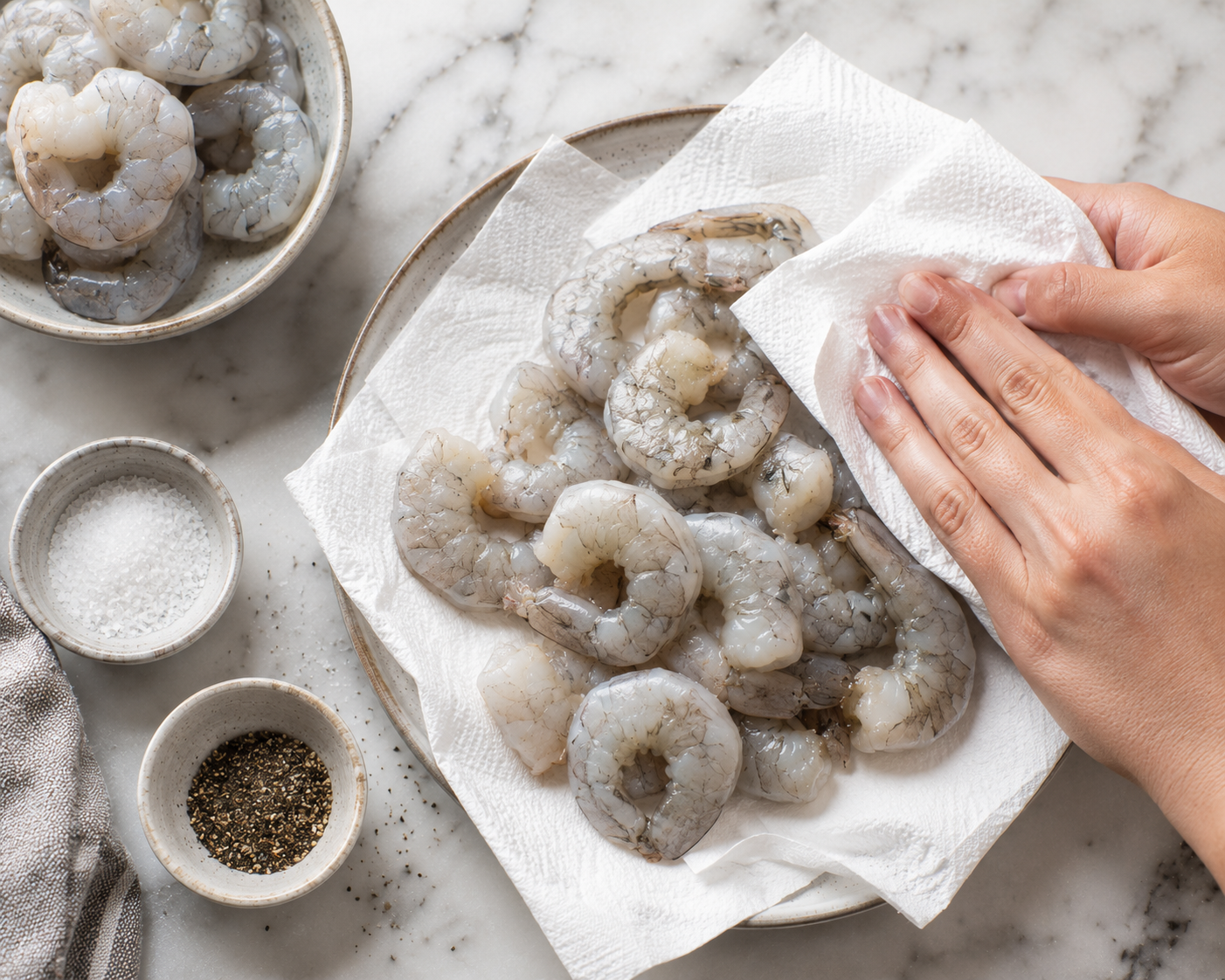
Start by drying the shrimp thoroughly. Surface moisture is one of the biggest reasons shrimp steam instead of developing good contact with the pan.
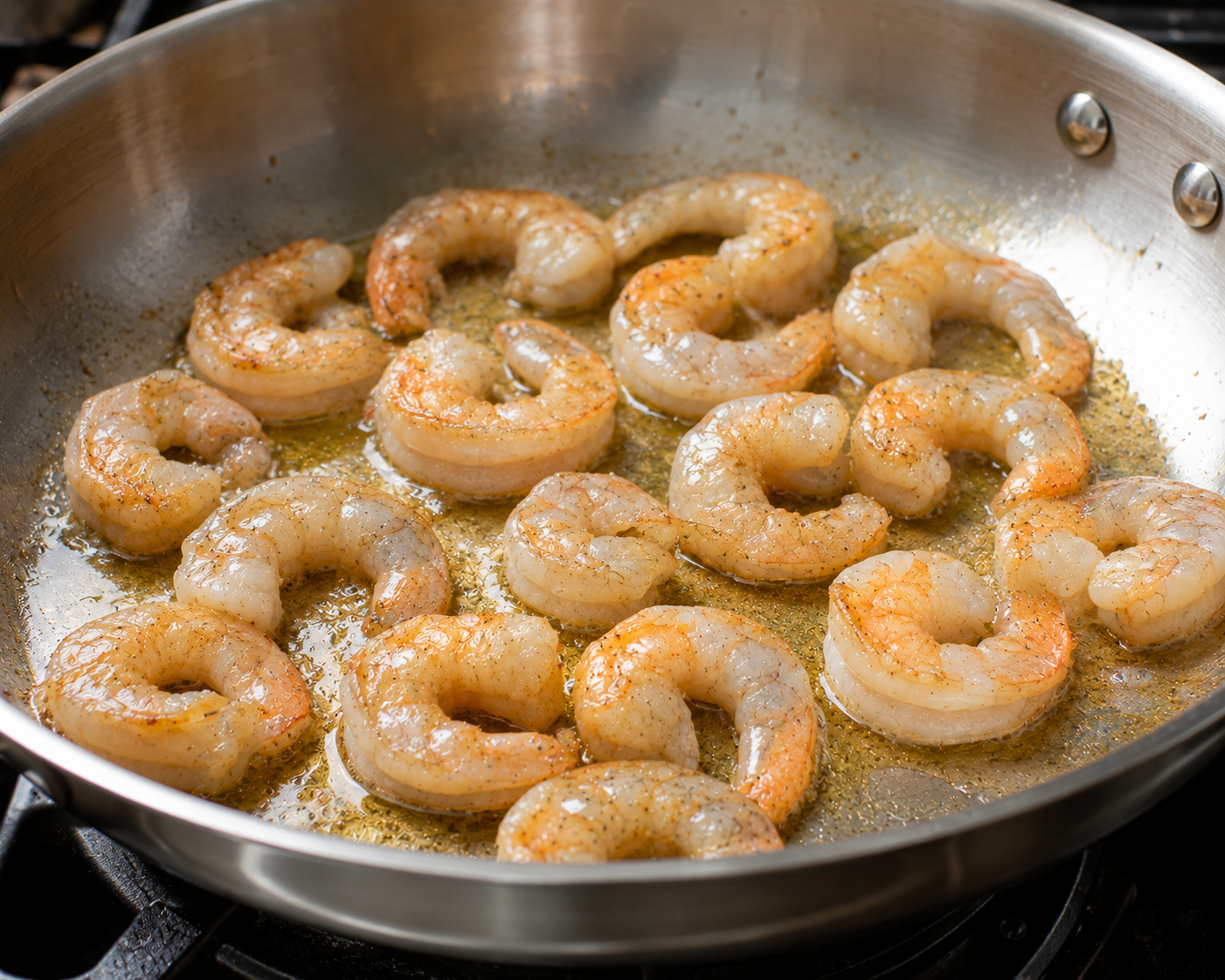
Heat the skillet before adding the shrimp, then cook them in a single layer. Once the first side has taken on color, lower the heat before the butter and garlic go in. That change in temperature is what keeps the garlic from scorching while the shrimp finish cooking.
Remove the skillet from the heat as soon as the shrimp turn opaque. Add the lemon and parsley at the end so the sauce keeps its fresh flavor instead of tasting cooked down.
Expert Tips
Keep everything beside the stove before you start. Shrimp move from undercooked to overcooked quickly, so this is not a recipe where you want to stop halfway through and mince garlic or juice a lemon.
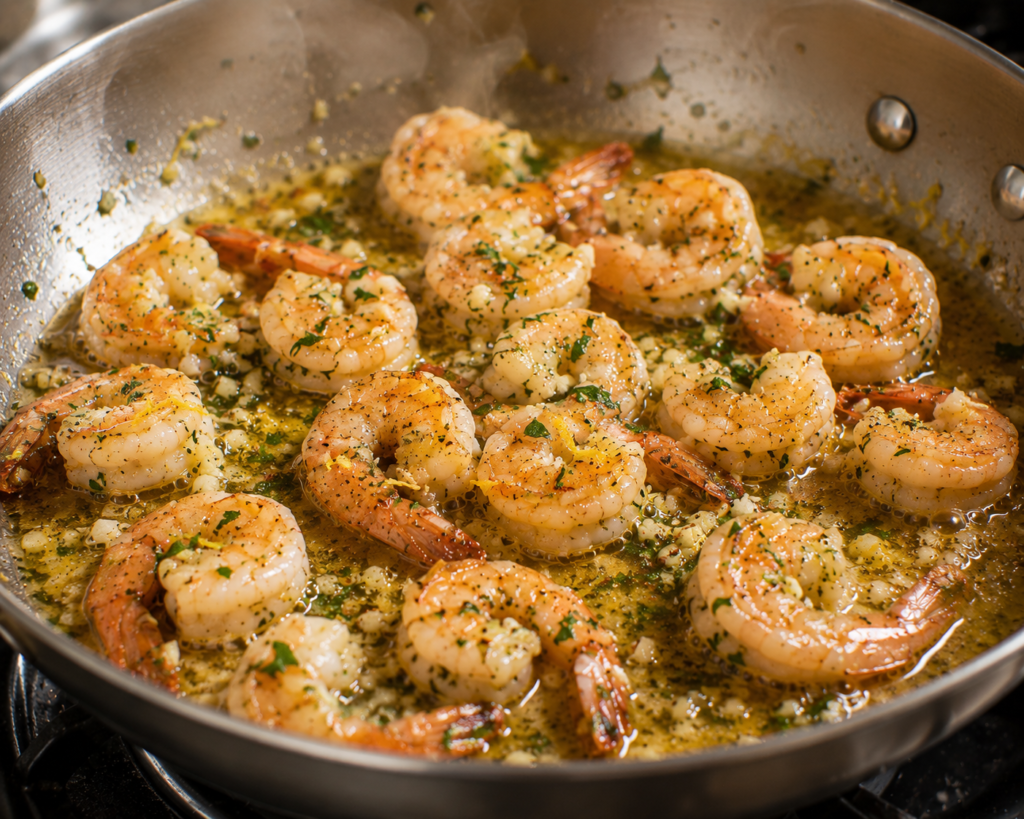
Dry the shrimp well, give them space in the skillet, and lower the heat before adding the garlic. Those three details do more for the final texture than adding extra butter or seasoning.
Watch the shrimp instead of relying only on the clock. Their centers should turn opaque while the texture stays tender. If they curl tightly and feel firm, they have likely gone too far.
Recipe Variations
For a spicier version, add more red pepper flakes or a small pinch of cayenne. Chopped chives can replace parsley for a milder herbal finish, while lime can stand in for lemon if you want a sharper citrus flavor.
You can also turn the same base into a fuller meal by serving the shrimp over pasta, rice, or pearl couscous and spooning the remaining garlic butter from the skillet over the top.
Serving Suggestions
Garlic butter shrimp works best with something that can catch the extra sauce. Rice, pasta, crusty bread, roasted potatoes, or green beans all fit naturally without competing with the garlic and lemon.
Pearl couscous is another excellent option because its slightly chewy texture pairs well with the buttery pan juices. Spoon the shrimp and extra garlic butter over the top for an easy, complete meal.
Storage
Let leftover shrimp cool, then transfer them to an airtight container and refrigerate promptly. For the best texture, eat them within about 2 days.
Store any remaining garlic butter sauce with the shrimp rather than separately. It helps protect the shrimp from drying out and gives you something to spoon over them when reheating.
Freezing
Freezing cooked shrimp is possible, but it is not the best option for this recipe because the texture can become firmer after thawing and reheating. If you do freeze leftovers, cool them first, store them in an airtight freezer safe container, and use them within about 1 month for the best quality.
Thaw overnight in the refrigerator before reheating.
Reheating
Reheat garlic butter shrimp gently and only until warmed through. A skillet over low heat works well, especially if you add a small spoonful of the reserved sauce to keep the shrimp moist.
Avoid high heat and long reheating times. The shrimp are already fully cooked, so aggressive reheating can make them rubbery very quickly.
More Recipes You’ll Love
If garlic butter shrimp is your kind of dinner, keep going with the Cowboy Butter Recipe for a richer herb butter you can use on steak, chicken, seafood, and vegetables.
For another easy savory dinner, try Cowboy Butter Chicken Thighs. They use the same buttery, garlicky flavor direction but turn it into a heartier main course.
Conclusion
The best garlic butter shrimp does not need a long ingredient list or a complicated sauce. What matters most is controlling the heat.
Dry shrimp cook more cleanly in the skillet, lowering the temperature protects the garlic, and adding lemon at the end keeps the sauce fresh instead of flat. Once those details are right, the recipe becomes an easy dinner you can make again without having to rethink the method each time.
Serve it with rice, bread, vegetables, pasta, or couscous and spoon the extra garlic butter from the pan over everything.
Garlic Butter Shrimp
Description
This easy garlic butter shrimp cooks quickly in one skillet with fresh garlic, lemon, parsley, and a rich buttery sauce. Starting the shrimp in olive oil gives them enough heat to cook properly, while adding the butter and garlic after lowering the heat helps protect the garlic from burning. It is a simple weeknight dinner that works well with rice, pasta, bread, vegetables, or couscous.
Ingredients
Instructions
-
Dry and season the shrimp
If using frozen shrimp, thaw them completely first. Drain well, then spread the shrimp over paper towels and pat the surfaces thoroughly dry.
Place the shrimp in a bowl and season evenly with the kosher salt and black pepper.
Drying is important because excess water cools the skillet and causes the shrimp to release more liquid instead of cooking quickly against the hot surface.
-
Sear the first side
Heat a wide 12 inch skillet over medium high heat.
Add the olive oil and allow it to become hot and fluid. Arrange the shrimp in a single layer without piling them over one another.
Cook undisturbed for about 1 to 1 1/2 minutes, until the underside has developed color and the edges are beginning to turn opaque.
If your skillet cannot hold the shrimp comfortably in one layer, cook them in two batches rather than crowding the pan.
-
Flip the shrimp and reduce the heat
Turn each shrimp.
Immediately reduce the heat to medium low.
Cook the second side for approximately 30 to 45 seconds before adding the butter. At this stage the shrimp should be partly cooked but not yet tightly curled or completely firm.
The remaining cooking will happen in the garlic butter.
-
Build the garlic butter sauce
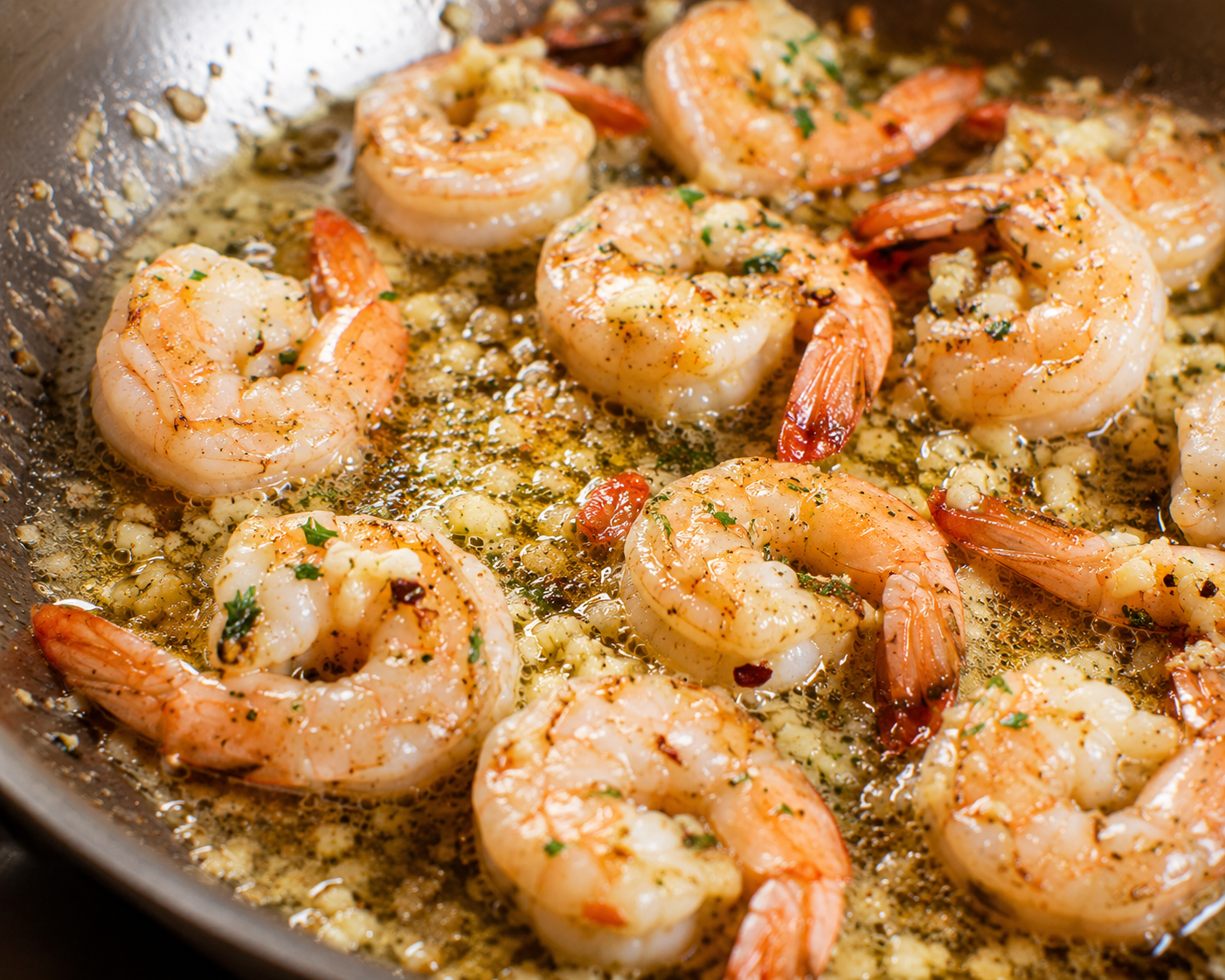
Add the butter to the skillet.
Once it has mostly melted and is gently foaming rather than aggressively browning, add the minced garlic and optional red pepper flakes.
Move the garlic through the melted butter and cook for about 30 seconds, just until fragrant.
Gently toss or turn the shrimp through the garlic butter while they finish cooking, approximately 30 to 60 seconds more, depending on their exact size and starting temperature.
The shrimp are done when the flesh is pearly or white and opaque rather than translucent. FoodSafety.gov gives the same visual doneness guidance for shrimp.
Remove the skillet from the heat as soon as the shrimp reach that point.
-
Finish with lemon and parsley
With the skillet off the heat, add the lemon zest, fresh lemon juice, and chopped parsley. Gently toss until the shrimp are coated and the butter, lemon, garlic, and natural pan juices form a glossy sauce. Taste the sauce and adjust the seasoning only if needed. Serve immediately with the garlic butter spooned from the skillet over the shrimp.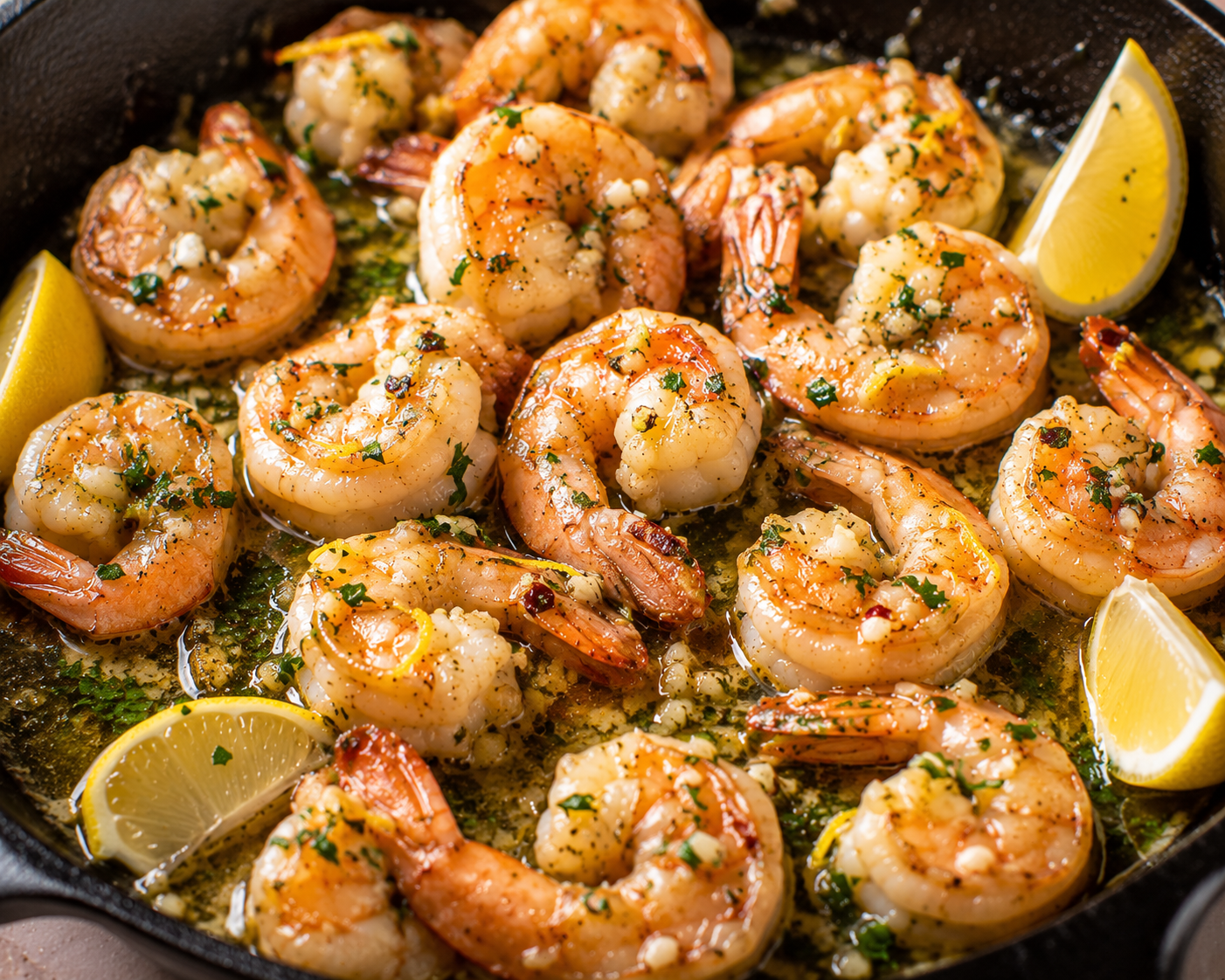
Nutrition Facts
Servings 4
- Amount Per Serving
- Calories 236kcal
- % Daily Value *
- Total Fat 16g25%
- Saturated Fat 8g40%
- Cholesterol 213mg71%
- Sodium 375mg16%
- Total Carbohydrate 2g1%
- Dietary Fiber 0.6g3%
- Sugars 0.5g
- Protein 23g46%
* Percent Daily Values are based on a 2,000 calorie diet. Your daily value may be higher or lower depending on your calorie needs.
Note
Pat the shrimp very dry before they reach the skillet, and have the butter, garlic, lemon, and parsley prepared before you start cooking. Shrimp cook quickly, so there is little time to prep ingredients once the pan is hot. Lower the heat before adding the garlic, then remove the skillet from the heat as soon as the shrimp are opaque. This helps keep the shrimp tender and the garlic fragrant rather than bitter.